THE SKY · 1609
Galileo’s Moon
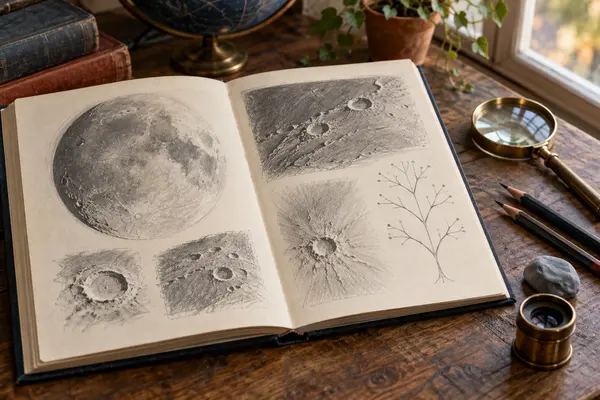
Night after night he drew the shifting shadows and showed the Moon was rough and mountainous, not a perfect globe.
How many drawings?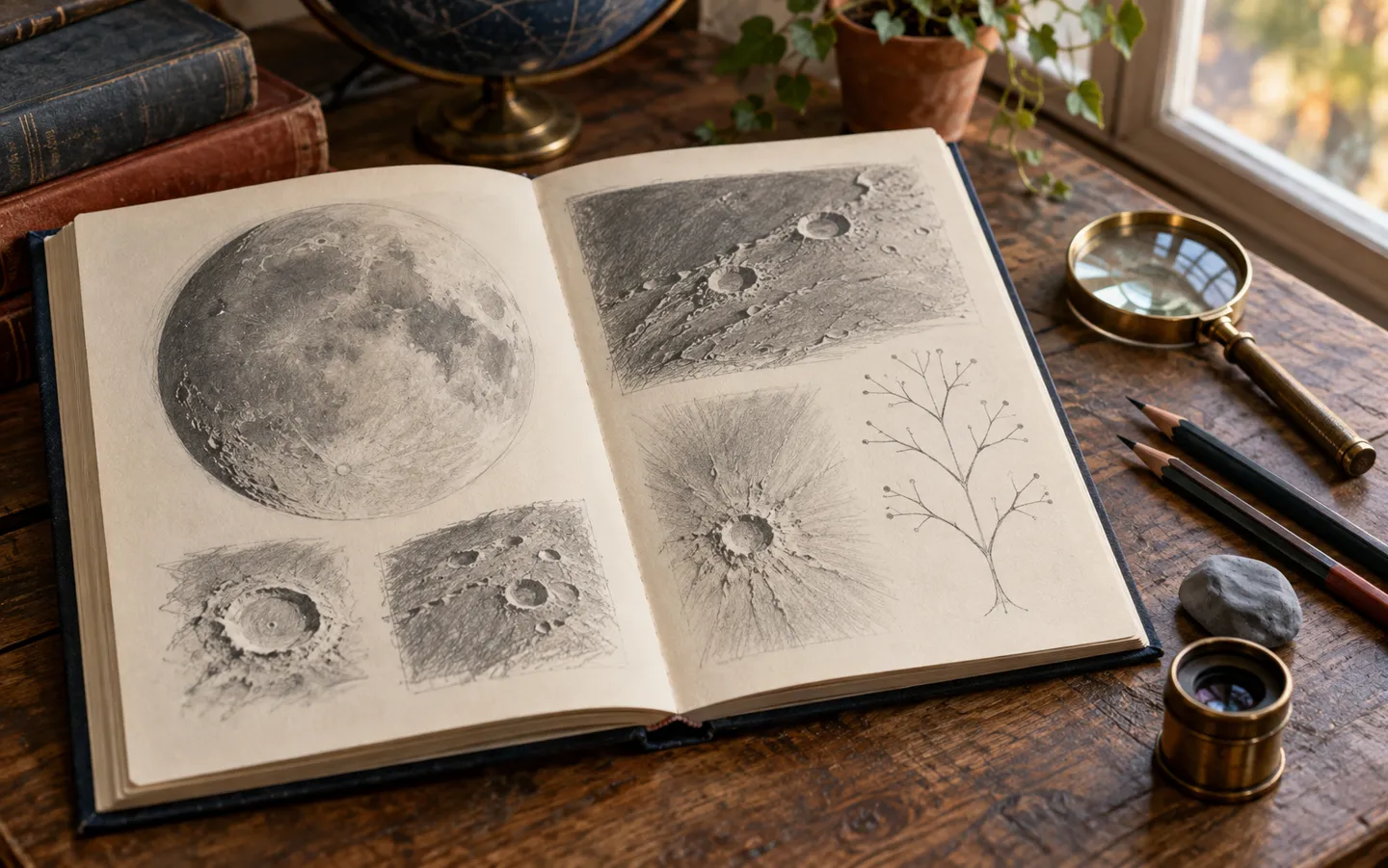
 doodlesketches
DRAWING AS A WAY OF SEEING
LOOK then draw
Before the camera, discovery was drawn by hand.
Galileo sketched the Moon’s rough face. Hooke drew a flea the size of a page. Darwin doodled a branching tree in a pocket notebook, and Cajal drew nerve cells well enough to share a Nobel Prize. Here are the facts behind five famous sketches, in plain English.
Plain English, with the sources linked.
Updated
Explore the timelineTHE SHORT ANSWER
For centuries, a careful drawing was
how new things were seen and shared.
THE SKY · 1609
Night after night he drew the shifting shadows and showed the Moon was rough and mountainous, not a perfect globe.
How many drawings?THE MICROSCOPE · 1665–1906
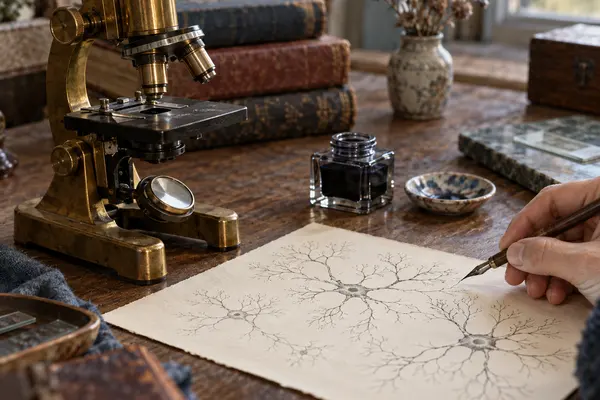
From a flea and a slice of cork to the branching cells of the brain, the microscope’s first pictures were drawn.
Read the factsTHE NOTEBOOK · 1837
A quick branching sketch in a postcard-sized notebook became one of the best-known diagrams in biology.
See the timelineA SKETCH TIMELINE
Pick a name to see the year and what the drawing showed. The bar marks where it falls between 1500 and today.
Leonardo’s date is when an album of his drawings was first recorded in the Royal Collection, not when he drew them.
TWO SKETCHBOOKS BY NUMBER
The printed pictures were a careful
selection from many more drawings.
6+ to 4
Moon drawings in 18 days, then engravings
Galileo made at least six drawings of the Moon in the eighteen days from 30 November 1609. He chose four of his watercolour sketches to be engraved for Sidereus nuncius in March 1610.
GALILEO · 1609–1610
60
Engraved images in Micrographia
Robert Hooke’s Micrographia held sixty highly detailed engravings of things seen through his microscope, including a large fold-out drawing of a flea.
HOOKE · 1665
Both books turned careful looking into pictures that anyone could study, long before photographs could do the job.
SKETCH LIKE AN OBSERVER
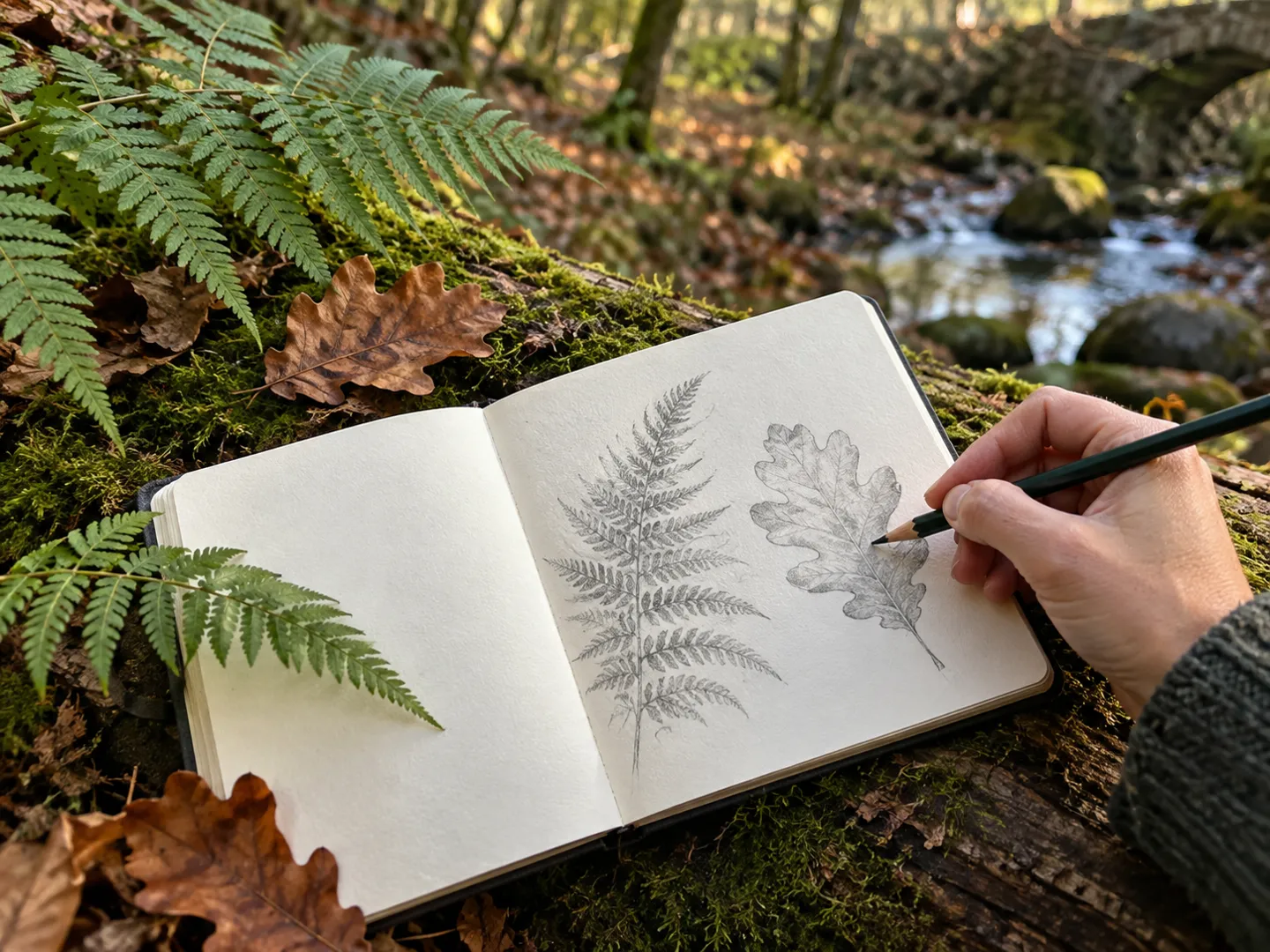
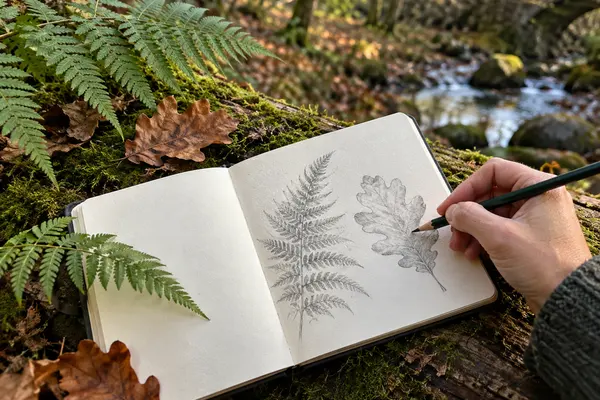
Look at the object more than the page. Draw the shapes and shadows you actually see, not the outline you expect.
Galileo drew the Moon over many nights as the light changed. Sketch one tree, window or plant across several days.
A hand lens turns a leaf, feather or slice of cork into a new landscape, much as Hooke found. Draw the detail large.
Note the date, place and light beside each sketch. A notebook becomes far more useful when you can see what changed.
THE FACTS
Galileo first turned his telescope to the Moon on the early evening of 30 November 1609, and recorded its uneven edge in a drawing.
Hooke saw cork as “all perforated and porous, much like a Honey-comb”, and in 1665 first used “cell” as a biological term.
Darwin’s 1837 notebooks are about the size of postcards. Missing from Cambridge University Library since 2001, they were returned anonymously on 9 March 2022.
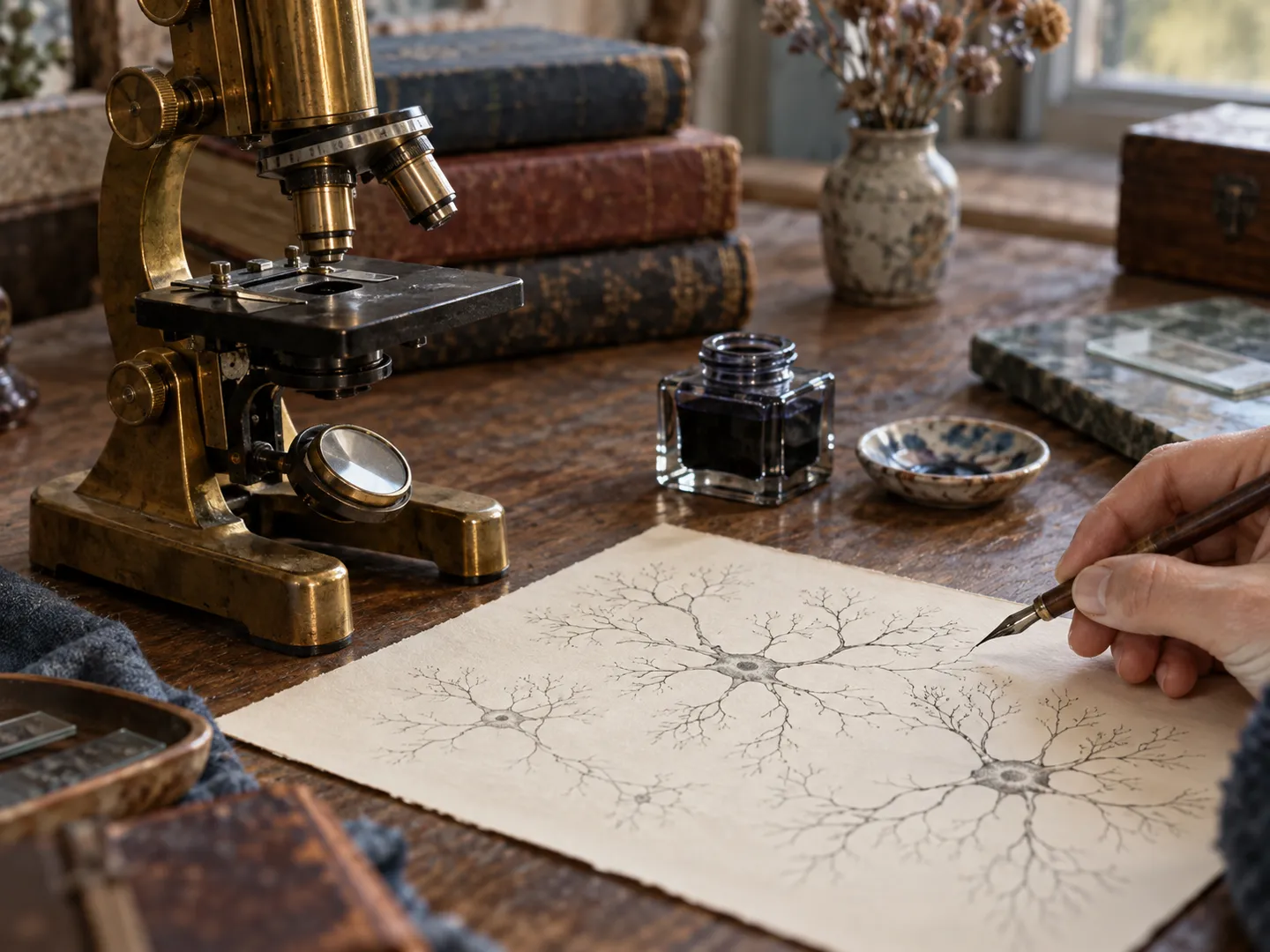
Cajal drew nerve cells as they appeared under the microscope, and shared the 1906 Nobel Prize in Physiology or Medicine with Camillo Golgi.
The Royal Collection holds around 550 of Leonardo da Vinci’s drawings, from an album first recorded there in 1680.
QUICK QUESTIONS
Short answers to the questions people ask most.
On the early evening of 30 November 1609, in Padua. He made at least five more drawings over the next eighteen days, and four of his sketches were engraved for Sidereus nuncius, published the following March.
From Robert Hooke. Looking at cork under a microscope, he saw a structure “much like a Honey-comb” and first used “cell” as a biological term in Micrographia, published in 1665.
A small branching diagram in Darwin’s B notebook of 1837, showing species splitting from common lines. The postcard-sized notebook went missing from Cambridge University Library in 2001 and was returned on 9 March 2022.
Santiago Ramón y Cajal drew the nervous system as he saw it under the microscope, with remarkable clarity. He shared the 1906 Nobel Prize in Physiology or Medicine with Camillo Golgi for their work on its structure.
The Royal Collection holds around 550 of them, from an album first recorded in the collection in 1680. They are regularly shown at The King’s Galleries and lent to exhibitions around the world.
Sources
A NAME WORTH DRAWING ON
doodlesketches.com is part of the DoodleSale portfolio. It isn't in an auction right now, but you can ask about leasing it.